“Welcome among the waste
We won’t throw you away”
Faust’O, Benvenuti tra i rifiuti
What remains of a designer’s work when the client says “no”? What part of professional identity is built — or lost — when a proposal is rejected? With REJECTED! RESURRECTED!!, Studio Yukiko presents a lucid, ironic, and deeply political exhibition that reflects on the role of the client, the materiality of the creative process, and the weight of the unchosen image. The medium is as simple as it is meaningful: a fax machine.
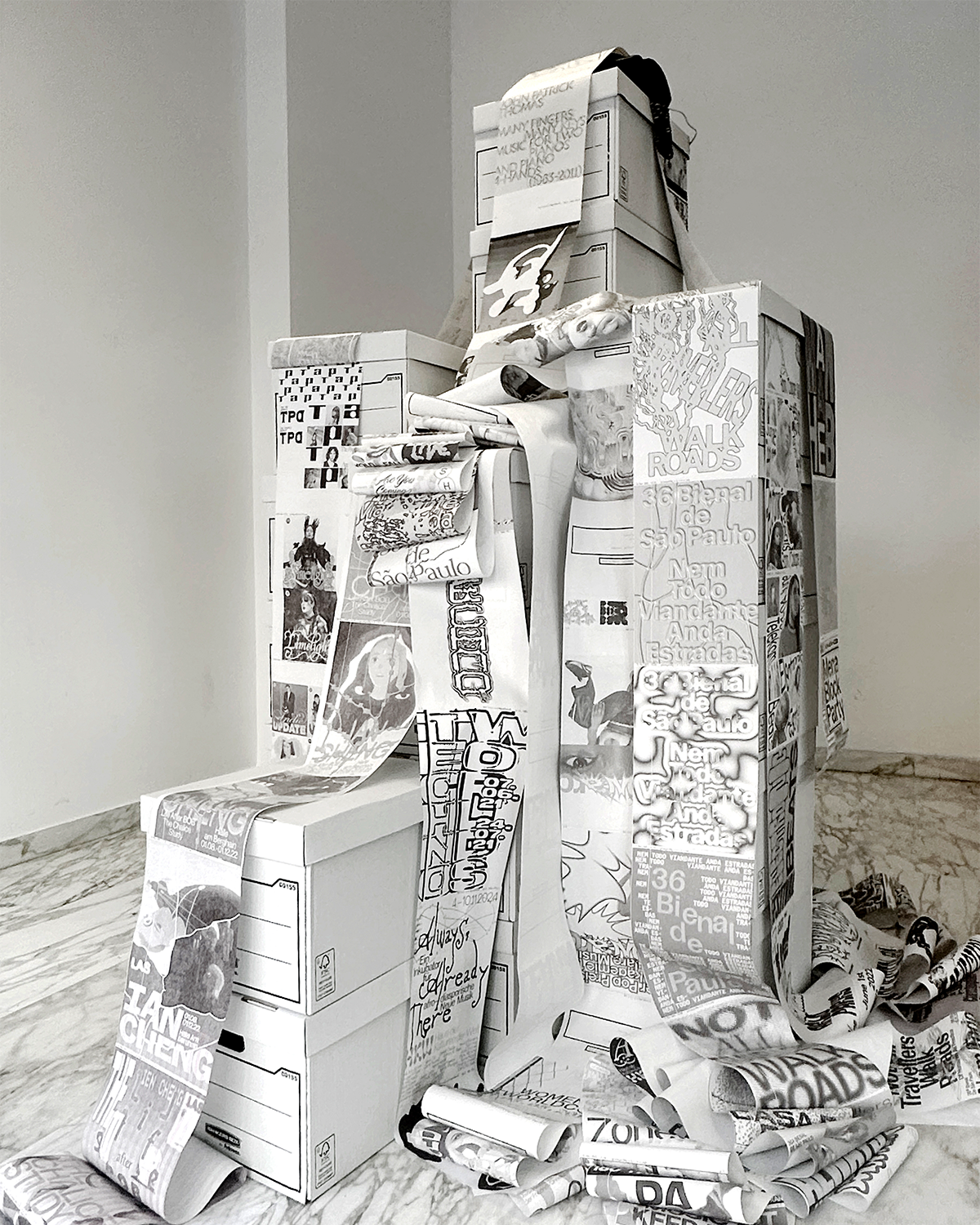
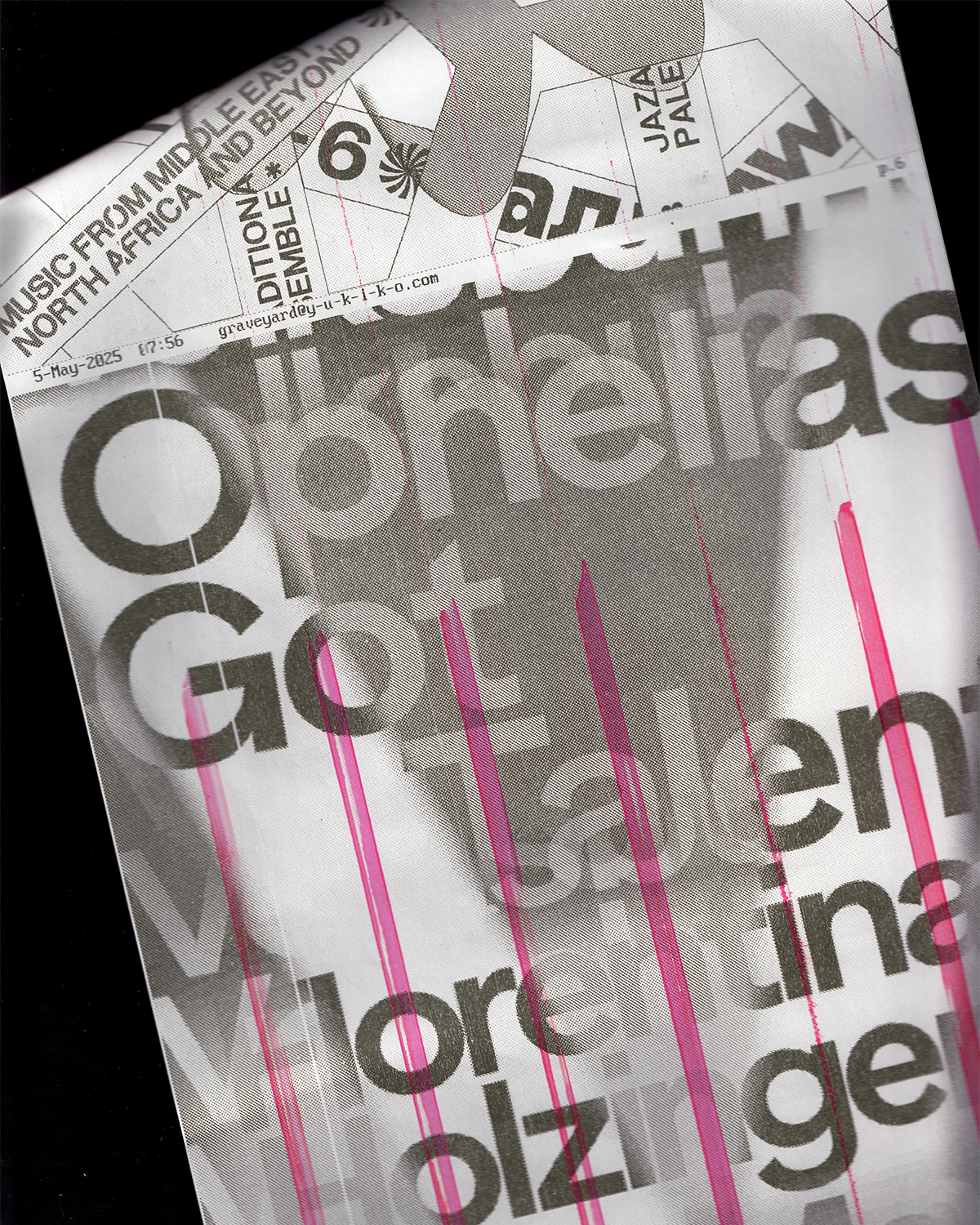
Each day, at more or less regular intervals, the machine spits out a new fragment of the past. Discards, rejected proposals, ideas that never made it to their destination. The gallery walls slowly become the map of a parallel universe — the Yukiko that could have been. A sort of scrapbook of broken dreams, but also a gesture of reclamation, of silent disobedience. On display is not the best, nor the worst: it’s everything usually buried under layers of final versions, commercial logic, and revisions.
REJECTED! RESURRECTED!! brings to light a question that is both obvious and rarely discussed: who really defines the identity of a studio? It’s easy to frame the client as a constraint, but it’s equally true that no designer exists outside their public archive — and that archive is (also) made of others’ choices. The question is not only “what would we be without clients?” but rather: “are we only what clients allow us to be?”
At Parco Gallery, exhibitions allow studios and designers to express themselves without clients. In this sense, Yukiko’s project is a meta-reflection: this is what we might have been without clients. Showing what happens when the client is absent becomes a way to think about their latent role — not so much as a limitation, but as a force that guides, selects, and leaves traces — even when it erases.
It’s not just a matter of content. The form itself is a message. The choice of using a fax is not nostalgic flair. On the contrary, it’s a methodological statement. The fax is slow, frustrating, imprecise. It takes time. Sometimes it jams, sometimes it prints only half a page. A lazy, imperfect machine that seems to suggest a return to a time when even communication needed to settle. In a hyper-connected present where instant reactivity and nonstop production are expected, this feels like an almost subversive act. The fax is the technology of waiting, of error margins, of invisibility made manifest.
There’s something performative, almost theatrical, in the act of sending. The ringing phone, the slow emergence of the pages, the uncertainty of the result: it’s a ceremony that stages inefficiency as value. A counterintuitive gesture that gives dignity to wasted time, frustration, and error. It’s the opposite of the fetishized “friction” in user-centered design discourse: here, friction is not user-centered — it’s ontological.
The fax thus also becomes a kind of scenic device, in the style of the technical apparatuses analyzed by Harun Farocki in his essay films. It is the machine itself that speaks, sets the pace, materializes effort, waiting, and waste.
There’s also a more subtle aspect, tied to the physicality of the digital. Every day we produce absurd amounts of images, files, drafts. But where do they end up? How much of our work exists only as temporary traces on a server? REJECTED! RESURRECTED!! takes that ephemeral material and gives it form again. Printed paper, thermal ink, piles of sheets silently invading the exhibition space. Each printed centimeter is a fragment of time spent, energy invested, thought discarded. All within a scrap yard aesthetic, somewhere between archive worship and the dump of the invisible.
And then there are the drafts, the intermediate versions. The ones that haven’t yet succumbed to simplification, polishing, the coherence imposed by a visual identity. The ones where you can still sense the moment when anything was possible. There’s a fragile beauty in that: a beauty that design tends to suffocate to survive in the market. As Alice Rawsthorn writes in Design as an Attitude, “the aesthetic of the incomplete can more sincerely reveal a project’s intent than its final version.” In REJECTED! RESURRECTED!!, that fragility is allowed to live — even in messy, overlapped, crumpled form.
And perhaps even the client, seen through this lens, can be reinterpreted as a latent form of co-authorship. Not signing, but guiding. Not designing, but selecting. Every rejected work is also the reflection of an external gaze, of an implicit editorial logic, of a set of priorities acting in transparency. As Vilém Flusser suggested, “every project is a network of decisions conditioned by the conditions of context” (The Philosophy of Design, 1993).
All this could be read as a lament. But it’s more an act of liberation. As emerged multiple times in conversations with Michelle Phillips and Johannes Conrad — founders of Studio Yukiko — during the show’s preparation, it’s also a way of taking things a bit less seriously. To remember that often, in the ten rejected proposals, everything needed is already there. That the final version is not always the best. And that if you’re a good designer, they probably all were.
REJECTED! RESURRECTED!! is a punk gesture in its simplicity. An ironic and poetic way of reclaiming the discarded. A low-res laugh printed daily on the thermal paper of an outdated machine. A reminder that even in rejection, there is dignity — and perhaps, something even more authentic.
Design isn’t always progress, order, clarity. Sometimes it’s noise, entropy, dispersion. And in that disorder — like in the unfurled rolls of fax paper — a different kind of memory may hide. Or even, truth.